Fundraising Strategies for Health-Based Charities: A Cyclist’s Guide
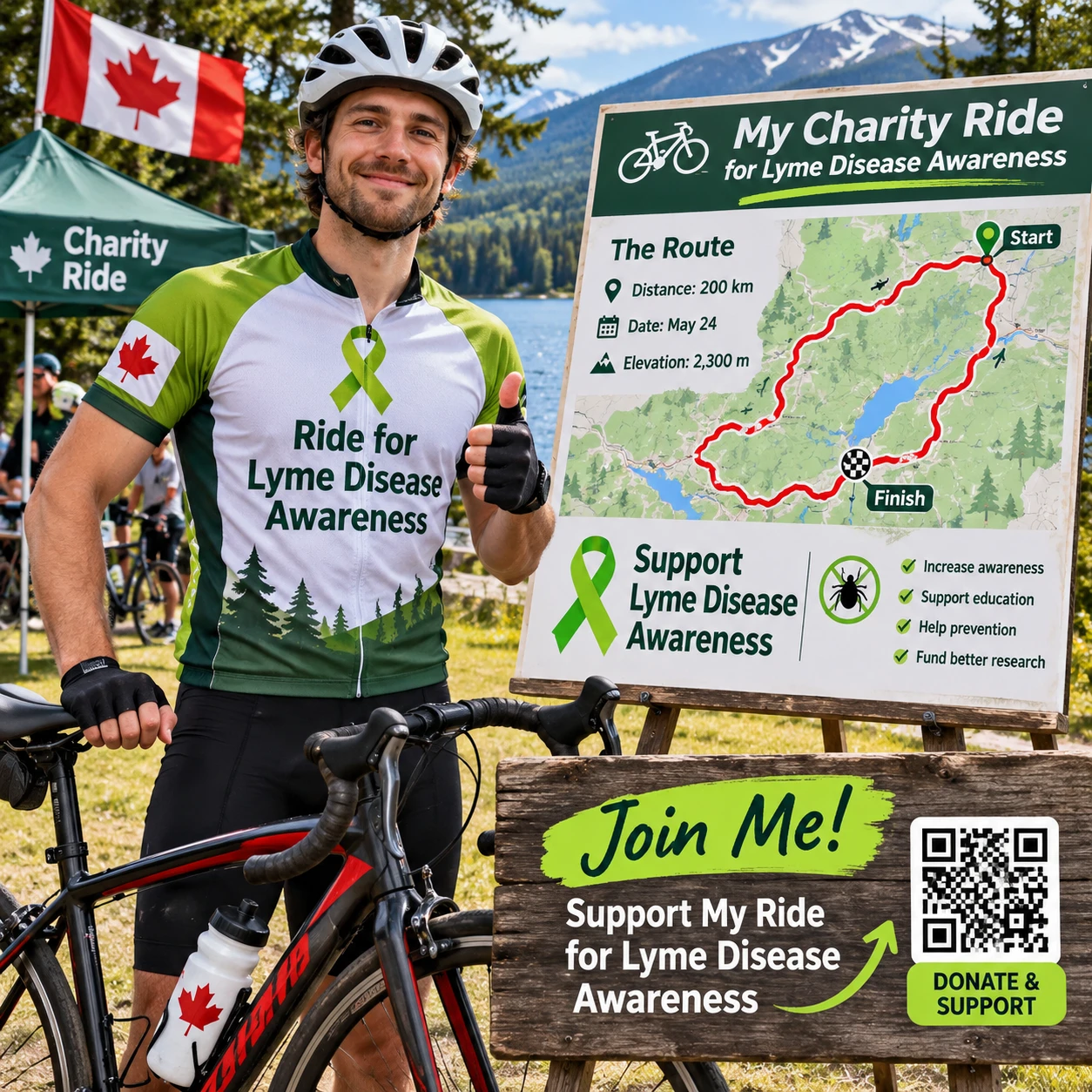
A charity cycling event gives you a reason to ride and a practical way to invite others to support a cause. If you are fundraising for a Canadian health charity focused on Lyme disease, a clear story, thoughtful donor outreach, and regular updates can help people understand why the ride matters and how they can take part.
Start with a clear goal and a personal reason
Set a realistic fundraising goal and explain why you chose to ride for Lyme disease awareness or support. A specific target gives donors a clear purpose for their contribution, while a personal reason makes your appeal feel genuine.
Start by checking the charity cycling event’s fundraising requirements, deadlines, and donation process. Then choose a goal that feels meaningful but achievable for your network. You might base it on the event’s minimum, a previous fundraising effort, or the number of people you expect to contact. Treat the figure as a guide, not a promise of results.
Connect the ride to your reason for supporting the cause. Perhaps someone close to you has been affected, or you want more people to learn about the charity’s work. Share only what you are comfortable making public, and avoid presenting personal experience as medical guidance. For reliable background on Lyme disease in Canada, refer readers to the Government of Canada’s Lyme disease information.
A simple planning check is goal, reason, proof: What amount are you aiming for? Why does the cause matter to you? Where can people verify the charity’s mission and donation details? Answering all three makes your invitation more credible.
Make your fundraising page easy to act on
A strong personal fundraising page tells visitors why you are riding, what charity you support, and how to donate. Keep the story concise, make the donation button easy to find, and describe the charity’s work using information the organization has confirmed.
Write in your own voice. A useful page usually includes:
- Your reason for riding: A few honest sentences about your connection to the cause.
- The event and goal: Name the charity cycling event, your target, and the date or deadline.
- The charity’s mission: Summarize its work accurately, linking to the organization’s official information if the platform allows it.
- A clear next step: Invite visitors to donate through the approved page or share it with someone who may be interested.
Be precise about donation impact. Unless the charity publishes verified examples or specific allocations, do not claim that a certain donation amount will fund a particular service or outcome. You can say that contributions support the charity’s work, then point readers to its own explanation of how funds are used. Clear limits build trust.
Ask directly and make giving simple
Direct, respectful donor outreach is often easier to act on than a general announcement. Send a personal note to friends, family, colleagues, and local contacts, explain the ride briefly, and include one clear way to contribute.
Tailor the message to the person. A colleague might appreciate a short email; a close friend may respond better to a personal conversation. For example: “I’m riding in a charity cycling event for a Canadian health charity focused on Lyme disease. My goal is $500, and I’d be grateful if you considered donating or sharing my page. No pressure if it isn’t a fit.”
Make giving straightforward by checking that your personal fundraising page works on a phone and clearly shows the charity, event, and donation steps. Offer sharing as an alternative for people who cannot give. Avoid repeated messages that assume a person’s finances or interest, and do not track or publicize individual giving without permission. A respectful request leaves the decision with the donor.
Turn training and event milestones into fundraising moments
Use training rides, preparation milestones, and event-day updates to give supporters natural reasons to revisit your fundraising page. A short update can renew attention without turning every ride into a sales pitch.
Plan a few moments in advance: announce your event and goal, share a preparation update, post a mid-campaign progress note, and send a final reminder before the ride. Each message can include a brief detail about your experience and a simple invitation to donate or share. Keep the focus on the charity and the ride, rather than giving unverified health information.
On event day, share a photo or note if you are comfortable and able to do so safely. Do not use a phone while riding; post before the start or after you finish. Milestones can also make good occasions to thank supporters publicly, but get permission before naming or tagging anyone.
There is a trade-off: frequent updates can keep the campaign visible, but too many requests may tire your audience. A small number of useful, genuine updates is usually more considerate than posting a donation appeal after every training ride.
Use online and community channels
Combine social media with personal and local channels to reach people who may not see your first appeal. Workplace giving, community groups, and matching gifts can extend a campaign, but availability and rules vary, so confirm details before making claims.
On social media, share the link with a short explanation of the cause, your goal, and the event. Add a progress update or photo when you have something meaningful to report. Make posts accessible with descriptive text for images, and avoid sharing personal health details about someone else without their consent.
Consider other options if your network is local or workplace-based:
- Ask a community association, cycling club, or local business whether it can share your campaign.
- Check with your employer about a workplace donation program or a matching-gift policy.
- Ask eligible donors to verify whether their employer matches charitable contributions and what documentation is required.
Matching gifts can increase a donation’s value when a program applies, but do not promise a match until the employer confirms the terms. Keep any event or workplace fundraising activity within the charity’s rules.
Thank donors and report back
Thank donors promptly and send a post-event update describing the ride and the amount raised once the total is confirmed. Closing the loop shows respect for supporters and helps them see what their participation made possible.
A personal thank-you can be brief: acknowledge the contribution, say what their support meant to you, and avoid implying a specific donation impact unless the charity has verified it. Follow the charity platform’s guidance on donation receipts and tax matters; do not offer tax advice yourself.
After the event, report back with the finish, a memorable moment, and the final fundraising total. If the charity has shared information about how funds support its work, include that information accurately and link to the source. A sincere update is useful even if you did not reach your original goal. Thanking people for sharing, cheering, or helping with logistics also recognizes that support comes in more than one form.
Frequently asked questions
How early should I start fundraising for a charity ride?
Start as soon as your event registration and fundraising page are ready. Beginning several weeks or months ahead gives you time to make a first appeal, share progress, and send a final reminder without rushing people.
What should I include on my fundraising page?
Include your personal reason for riding, the event name and date, your fundraising goal, an accurate description of the Canadian health charity’s work, and clear donation instructions. Use only claims about donation impact that the charity confirms.
How can I ask people to donate without pressuring them?
Make a direct request, explain why you are riding, and give people an easy way to donate or share. Say that contributing is optional, avoid repeated personal follow-ups, and respect a “no” or no response.
What are alternatives if I’m not comfortable posting on social media?
Send individual emails or messages, talk with people in person, ask a cycling club or community group to share your page, or check whether your workplace offers charitable giving or matching gifts. You can fundraise effectively without posting publicly.